Animal Fat Oil Pressing Solution
Animal fat press machine for lard and tallow production. Hydraulic pressing of rendered cracklings with honest yield guidance for Mexico, Pakistan, Egypt and Europe. Haonuo factory price.
Quick Answer
Yes — the Haonuo hydraulic oil press is well suited to animal fat, working alongside your rendering kettle: render the ground fat at low temperature, then press the hot cracklings to recover the fat simple melting leaves behind. From 100 kg of clean fat trimmings (75-90% fat) expect roughly 70-85 kg of rendered lard or tallow plus 12-25 kg of pressed cracklings, with results varying with fat quality and freshness. One HN325 tabung press takes 100 kg per batch (35-45 min hot press), so a single machine runs roughly 800-1,200 kg/day — a double-barrel or HN365 reaches 1,500-2,500 kg/day. If you serve Muslim markets, keep tallow (halal beef/mutton) and lard (pork) on fully separate lines.
Overview
Lard and tallow are among the oldest traded fats in the world — and demand is growing again. Lard sells into bakery, frying and traditional food markets in Mexico, China, Spain and Central-Eastern Europe, while tallow feeds soap, feed, oleochemical and biodiesel industries in Pakistan, India, the Middle East and Egypt. For slaughterhouses, meat processors and rendering plants, fat trimmings are a low-cost byproduct; a dependable animal fat press machine turns that byproduct into a sellable fat business.
The role of the hydraulic press is specific and honest: heat rendering melts out most of the fat, but the remaining cracklings (greaves) still hold valuable residual fat. Pressing the hot cracklings with a hydraulic lard and tallow press machine recovers that residue, raising your total fat recovery by several points and producing a pressed crackling cake that sells as feed or pet-food ingredient.
Low-temperature rendering plus hydraulic pressing also protects quality: gentle heat keeps the fat light in color and mild in flavor for food-grade lard, while harder beef and mutton tallow is pressed hot for maximum recovery into industrial and halal food markets.
Oil Yield Expectations
| Raw Material | Fat Content | Expected Press Yield | Residual Fat in Cake |
|---|---|---|---|
| Clean pork fat trimmings (lard) | 80-90% | 75-85% | ≤ 8% |
| Clean beef/mutton fat (tallow) | 75-88% | 70-82% | ≤ 9% |
| Poultry fat | 70-85% | 65-78% | ≤ 10% |
| Mixed / lower-grade trimmings | 60-75% | 55-68% | ≤ 10% |
Key factors affecting yield:
- Fat quality and freshness: Fresh, well-trimmed fat with little meat attached gives the highest yield and the lightest color
- Rendering temperature: Low, gentle rendering protects food-grade quality; press the cracklings while still hot
- Grinding size: Small, even pieces render faster and press cleaner
- Material type: Lard cracklings press easily; beef and mutton tallow is harder and needs hot pressing for full recovery
Why Choose Our Lard & Tallow Press
- Honest engineering advice — We tell you upfront: the press works with your rendering process, not instead of it. We help you size rendering, pressing and filtration as one line so nothing bottlenecks.
- Designed for the rendering trade — Our animal fat pressing solution is built for slaughterhouses and rendering plants from Mexico and Spain to Pakistan and Egypt, with guidance on keeping halal tallow and lard lines separate.
- Higher total recovery — Hydraulic pressing of hot cracklings recovers residual fat that simple rendering leaves behind, and the pressed cake sells as a feed ingredient.
- Factory-direct pricing — No middlemen. Competitive pricing directly from the manufacturer saves you compared to trading company prices (actual savings vary).
- Low running cost — Hydraulic pressing has no wearing screw and consumes less power per kilogram of fat than continuous expellers of similar capacity.
What you get from 100 kg of clean fat trimmings
| Output | Lard (pork fat) | Tallow (beef/mutton fat) |
|---|---|---|
| Rendered + pressed fat | 75-85 kg | 70-82 kg |
| Pressed cracklings (feed) | 12-22 kg | 15-25 kg |
Typical figures for fresh, well-trimmed fat rendered at low temperature and pressed hot at standard machine settings; actual results vary with fat content, freshness and cycle settings.
What 100 kg of Animal Fat Trimmings Is Worth
| Output | Amount | Indicative value (USD) |
|---|---|---|
| Lard (food-grade) | 75-85 kg | $68-128 (@ $0.90-1.50/kg) |
| Tallow (industrial/feed grade) | 70-82 kg | $49-90 (@ $0.70-1.10/kg) |
| Pressed cracklings (feed) | 12-25 kg | $4-15 (@ $0.30-0.60/kg) |
| Total per 100 kg | $55-140 |
At 800-1,200 kg/day, one HN325 turns fat trimmings into roughly $440-1,680 of product per day — from a byproduct many processors pay to dispose of. Prices above are hedged indicative ranges; lard and tallow prices vary widely with grade, region and season. Confirm current local rates, then tell us your trimmings cost and fat price and we will calculate your exact daily margin.
Built for the Rendering & Edible Fat Trade
- Motors wound for 380-415V / 50Hz, 3-phase — the standard industrial supply across Mexico, Europe, North Africa and South Asia, customized at no extra cost
- Halal-line guidance — we advise on layout and cleaning so halal tallow and lard production stay fully separated where your buyers require it
- Shipped FOB Qingdao; we arrange sea freight to Karachi, Alexandria, Veracruz, Gdansk or Barcelona with full export documentation
- Wear parts (seals, filter cloths) ship with the machine, backed by 1-year spares support
- Video-call a live pressing demo with your own fat trimmings before you order
Market Demand & Regional Opportunities
Animal fat markets are growing because they are tied to two long-term trends: rising meat consumption in emerging economies, and the circular economy push to recover value from every byproduct.
Key markets by fat type:
| Market | Primary Fat | Demand Driver | Typical Price Range |
|---|---|---|---|
| Mexico & Central America | Lard (food-grade) | Bakery, traditional cooking, corn tortilla production | $0.90–1.50/kg |
| Pakistan & Middle East | Tallow (halal industrial) | Soap manufacturing, biodiesel feedstock, animal feed | $0.70–1.10/kg |
| Egypt & North Africa | Tallow (halal food + industrial) | Traditional fat consumption + oleochemicals | $0.65–1.00/kg |
| Spain & Southern Europe | Lard + Tallow | Charcuterie, bakery, traditional foods | $1.20–2.00/kg |
| India | Tallow (feed + soap) | Soap and oleochemical industries | $0.60–0.90/kg |
What this means for press sizing: A Mexican slaughterhouse producing 20 tonnes/day of beef trimmings can recover an extra 1,000–1,500 kg/day of tallow by pressing cracklings — at $0.90/kg that is $900–1,350/day of additional revenue from material that would otherwise become low-value feed or be disposed of. A Pakistan rendering plant processing 5 tonnes/day of mutton fat trimmings adds roughly $280–520/day in recovered halal tallow revenue.
Food-Grade vs Industrial-Grade Production
Not all fat needs the same treatment, and understanding where your product sits protects against costly misalignment with buyer expectations.
Food-grade lard and tallow require:
- Fresh edible-grade trimmings from inspected slaughter
- Low-temperature rendering (80–95°C, no scorching) to preserve light colour and neutral flavour
- Filtration with food-grade filter aids (diatomaceous earth, activated carbon)
- Moisture below 0.1% and acid value below 1.0 mg KOH/g
- Clean stainless-steel tanks and lines, documented cleaning schedules
Industrial-grade tallow for soap, biodiesel, and oleochemicals:
- Lower-grade trimmings including inedible offal fat
- Higher-temperature rendering (100–130°C) for maximum recovery
- Simple filtration; colour and flavour are not premium concerns
- Water content up to 0.5% is acceptable for industrial buyers
- Separate lines recommended if you also produce food-grade
Why this matters for machine selection: Food-grade producers should press hot cracklings (to 70°C oil exit) and filter immediately — the Haonuo HN325 with plate-and-frame filter press handles this cleanly. Industrial producers can press at slightly lower temperature and skip the polish filter step to reduce running cost. Tell us your target grade and we size the line accordingly.
Equipment Sizing for Different Plant Scales
Your press should match your rendering kettle output — an oversized press wastes capital, and an undersized one creates a bottleneck that forces you to tank up hot cracklings and lose quality.
| Plant Scale | Trimmings per Day | Recommended Press | Press Frequency | Daily Press Yield |
|---|---|---|---|---|
| Small rendering (1-2 workers) | 500-1,000 kg | HN325 Single Barrel | 8-12 batches/day | 350-820 kg rendered + pressed fat |
| Medium slaughterhouse | 2,000-5,000 kg | HN325 Double Barrel or HN365 | 10-15 batches/day | 1,400-4,100 kg |
| Large industrial | 8,000+ kg | HN365 or HN426 + double-barrel | Continuous scheduling | 5,600+ kg |
The bottleneck rule: Press throughput should equal 60–70% of rendering kettle output — this gives you buffer so you are not racing the kettle. If rendering runs 2 tonnes/hour target, the press should handle 1,200–1,400 kg/hour through one barrel.
Your rendering kettle also matters. A 500 L jacketed kettle running at 90°C renders about 300 kg of fat trimmings per hour. Two kettles feeding one HN325 Double Barrel press is a balanced line for medium operations.
Troubleshooting: When Pressing Doesn’t Deliver Full Yield
Press recovery depends on three variables the operator controls. When results fall short, work down this checklist before blaming the machine.
| Symptom | Likely Cause | Fix |
|---|---|---|
| Cake still oozes fat after pressing | Not pressed hot enough | Press cracklings while still 60–80°C from the rendering kettle; cold cracklings refuse to release residual fat |
| High residual fat in cake (> 9%) | Cycle ended too early, pressure not held | Hold final pressure for 15–20 minutes after flow stops, not just 10 minutes |
| Fat contains too much water or sediment | Settling tank undersized or filter bypassing | Allow 24-hour settling before pressing; check filter cloth for tears and replace any cloth that leaks cloudy filtrate |
| Lard recovery worse than tallow | Lard is pressed from softer cracklings — increase cycle time for lard | Add 5 minutes to lard cycles vs. tallow cycles; lard cake needs more time under pressure |
| Press smells burnt after first run | Rendering kettle ran too hot; press is fine | Lower rendering temperature to 90°C max for food-grade lard; industrial tallow can run to 115°C |
Real numbers from our customers: A Pakistani rendering plant was getting 62% recovery from mutton cracklings before they added a HN325. After 40 batches, they held pressure 18 minutes instead of 10, pressed at 75°C crackling temp, and hit 71% recovery — an extra 9% of fat from the same trimmings, with the same machine.
Animal Fat Oil Process Flow
Grinding & Cutting
Grind clean fat trimmings into small, even pieces for fast, uniform rendering
Low-Temperature Rendering
Melt the fat gently to separate oil from tissue and protect color and flavor
Hydraulic Pressing
Press the hot cracklings with a Standard or Heavy Duty Hydraulic Oil Press to recover residual fat
Settling & Filtration
Settle and filter the pressed fat for clean, premium lard or tallow
Recommended Animal Fat Oil Machine

Standard Hydraulic Oil Press
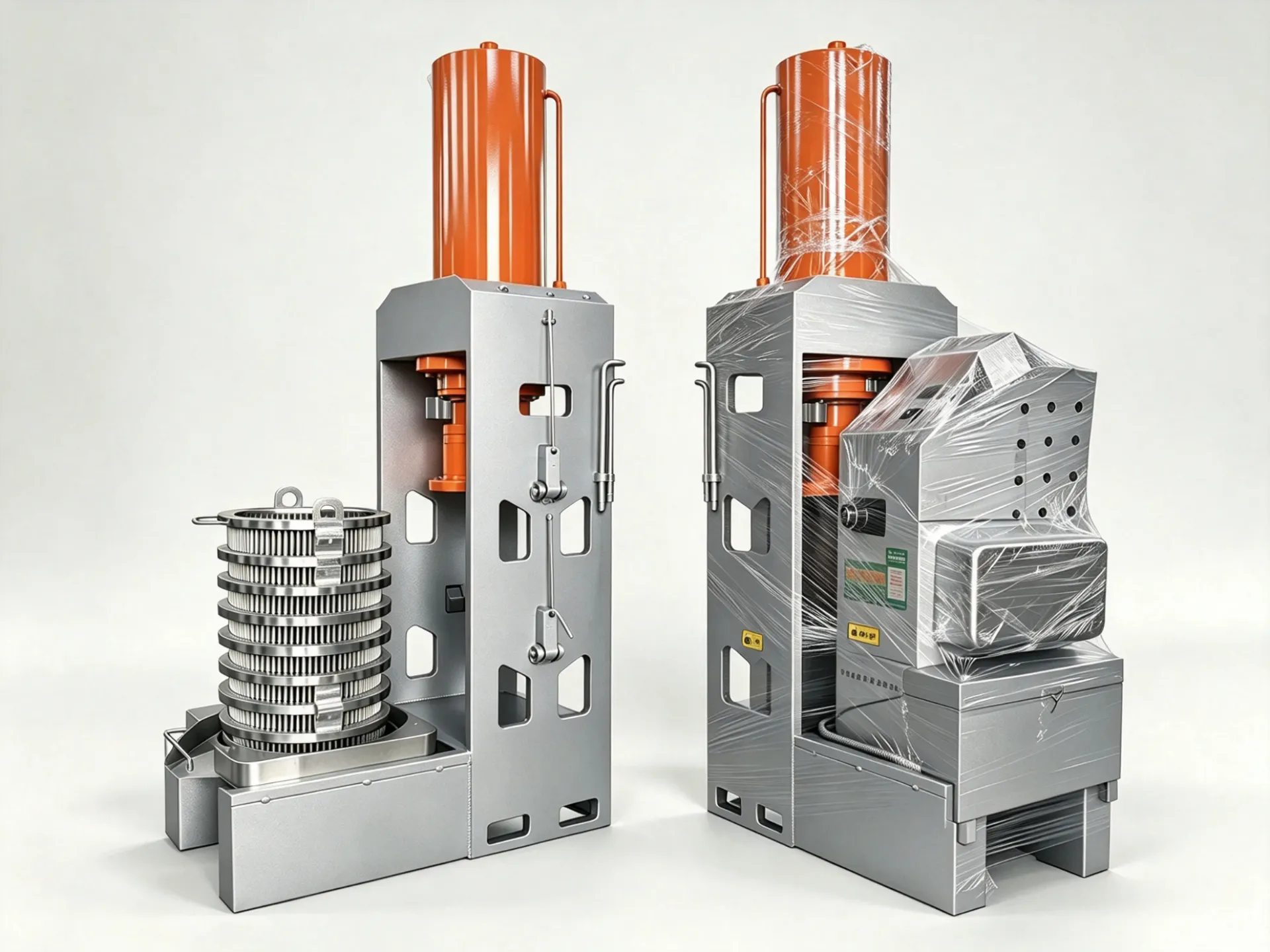
Commercial Hydraulic Oil Press

Sludge Dewatering Hydraulic Press
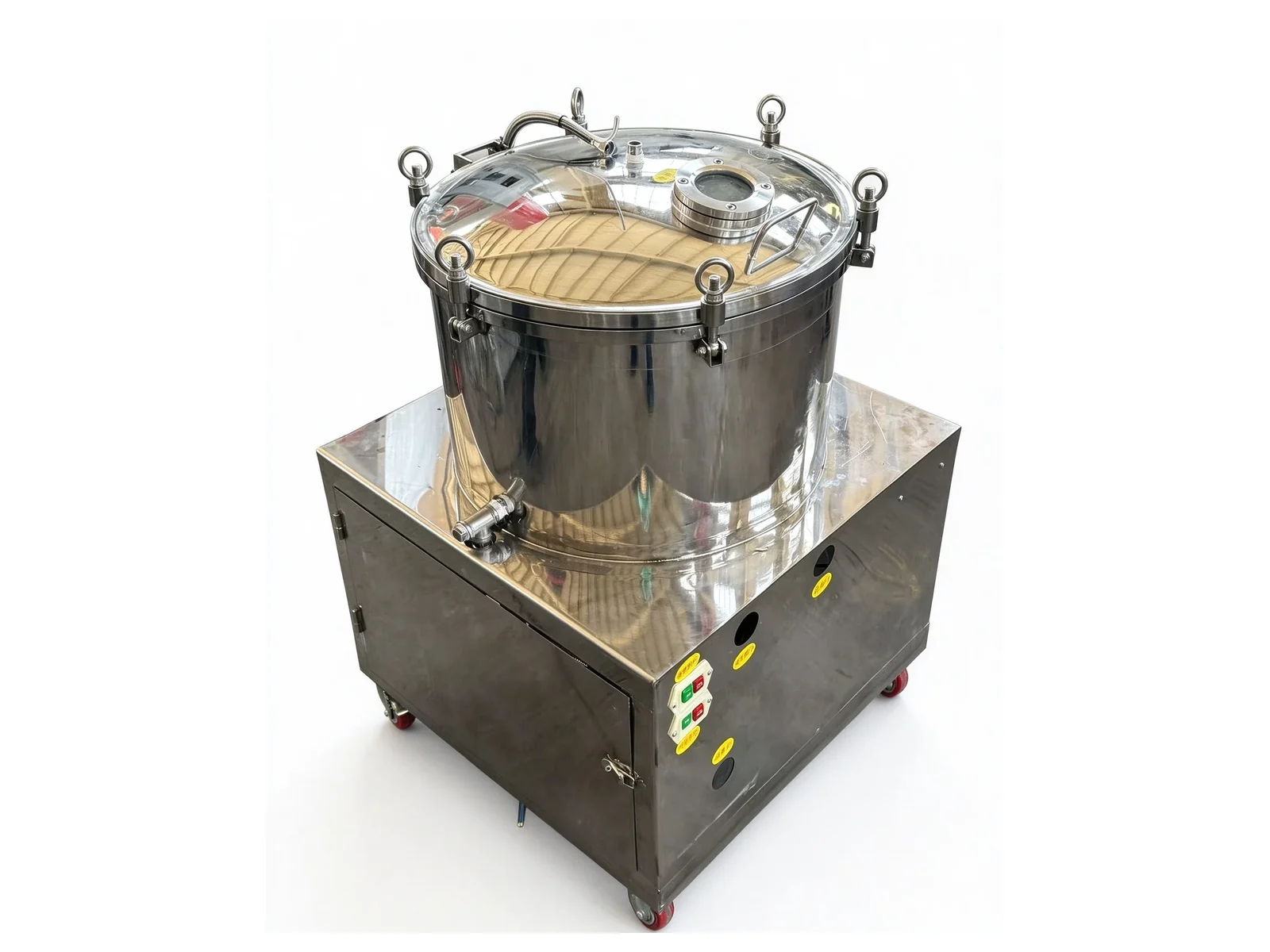
Pneumatic Oil Filter Press for Crude Oil
Animal Fat Oil Pressing Solution — Frequently Asked Questions
What is the fat yield from animal fat trimmings?
Can the same machine press both lard and tallow?
Is the pressed fat food-grade?
Can I produce halal tallow for Muslim markets?
Is animal fat pressing profitable?
What is the price of an animal fat press machine?
Can I use the same machine for animal fat and oilseeds?
Other Solutions
Palm Kernel Oil Pressing Solution
Palm oil machine and palm kernel oil press machine for efficient palm and palm kernel oil extraction. High-pressure hydraulic press for Southeast Asian and African markets. Haonuo factory price.
Sesame Oil Pressing Solution
High-yield sesame oil press machine with hydraulic technology. Extract premium sesame oil with low residual rate. Cold and hot press options from Haonuo.
Peanut Oil Pressing Solution
Complete 7-step peanut (groundnut) oil production with hydraulic press — cleaning, shelling, crushing, conditioning, moisture control to 4-6%, pressing and filtration. HN325/HN365.
Ready to Start Your Animal-fat Oil Business?
Contact us for a complete solution with professional equipment recommendations.
Get Factory Price